MAP Sensor Hose Collapse
The MAP sensor has about 98% of the authority to set the air to fuel ratio. Thus its ability to sense the manifold vacuum is very important. The OE MAP sensor hose is a hard line with rubber fittings on the ends. Over time the rubber fittings can loosen. If the engine backfires the hard line can be blown off of the fitting. The correct procedure is to either repair the OE hard line by attaching a new fitting with a Cyanoacrylate adhesive like Super Glue or replace the hose with a new correct part from Jerry's Gaskets. PN 10106118-N
Often the hose is replaced with a section of soft vacuum hose. There is normally oil vapor flowing in the plenum. The oil can soften a soft vacuum hose further and cause it to collapse.
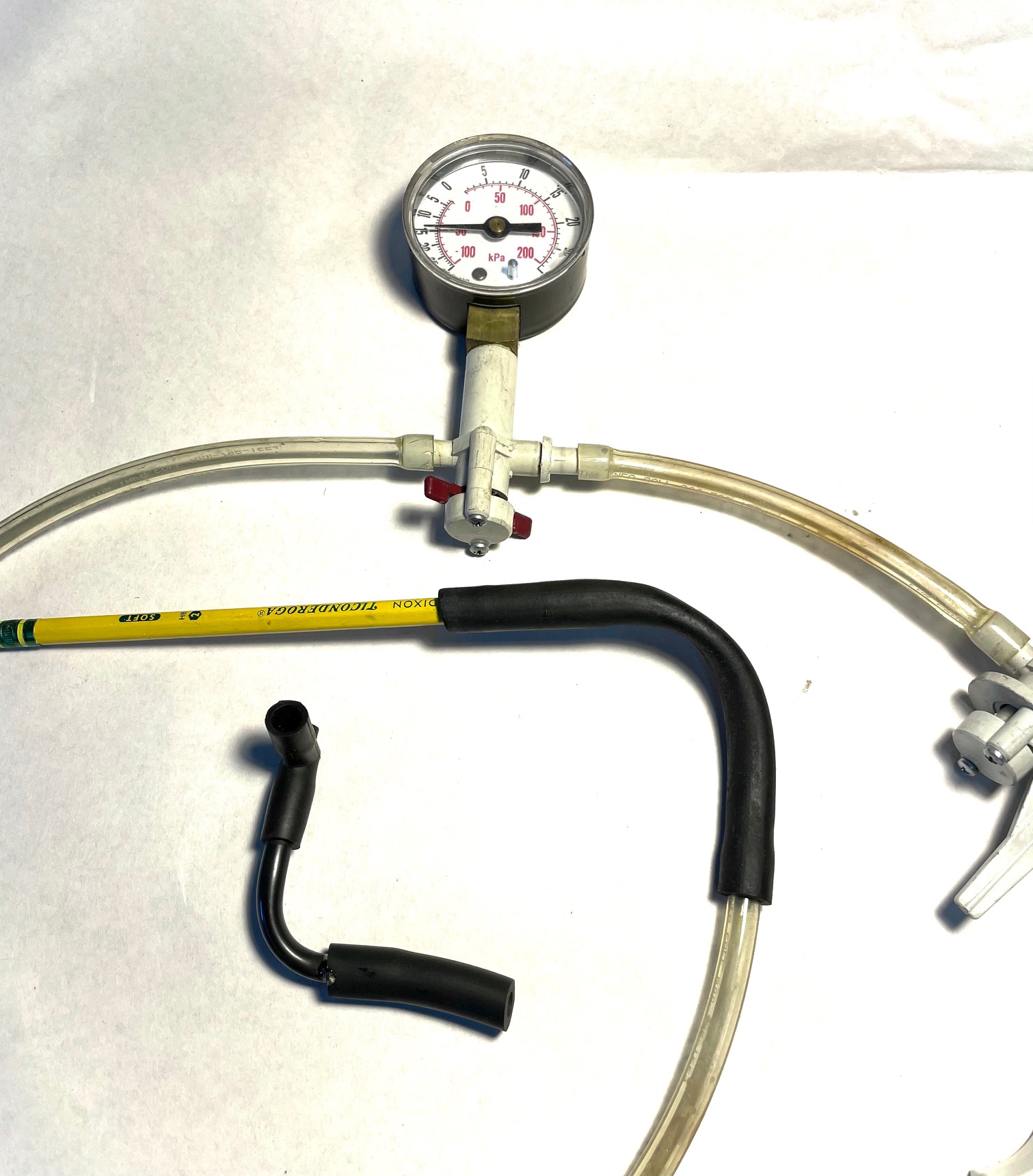
The picture shows an incorrect soft vacuum hose under 50 kpa/15 in/HG vacuum. A correct hard line hose assembly is also shown.
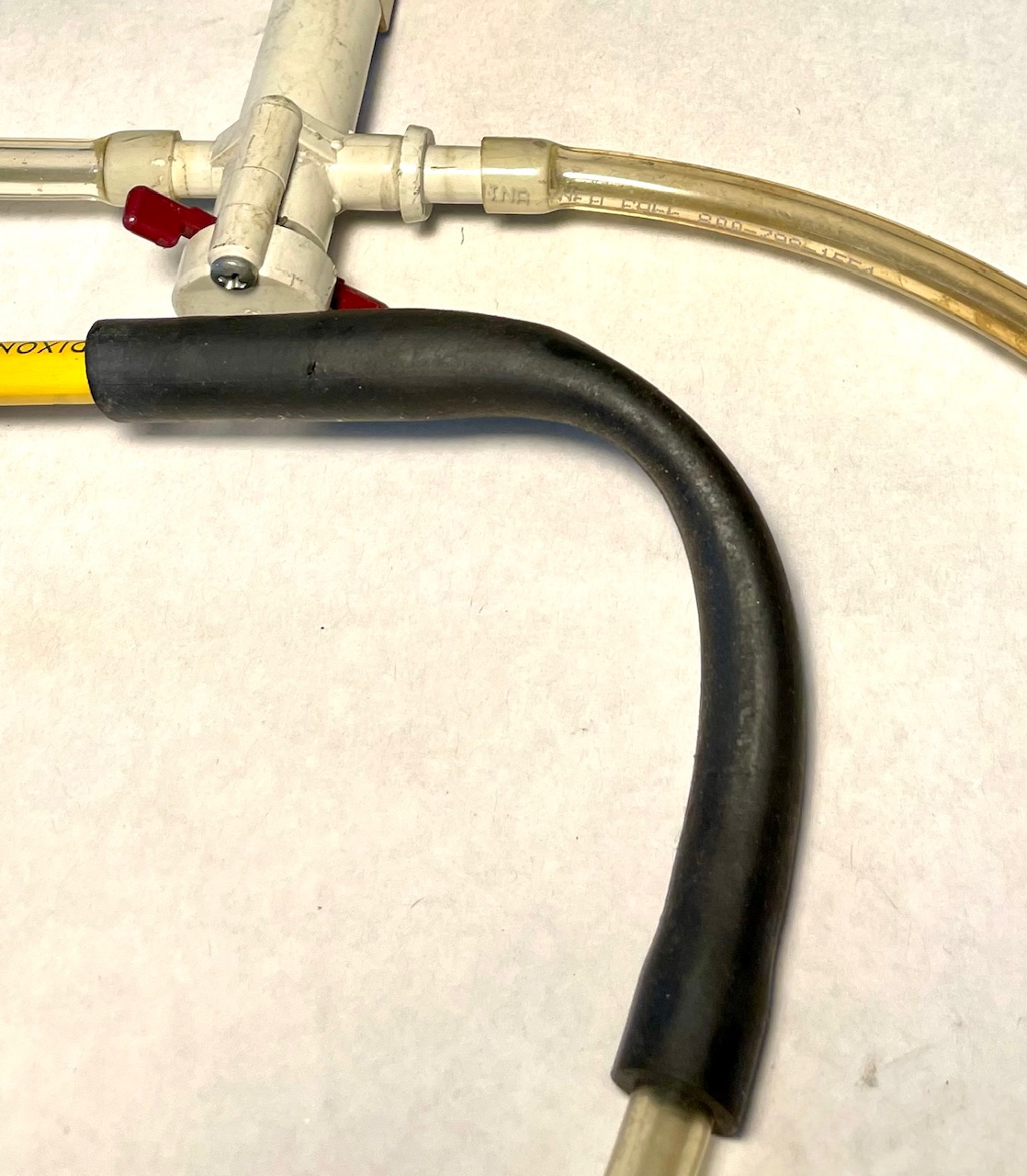
A close up view.
The MAP sensor hose should be clamped to the port on the plenum to prevent blow off in the event of a backfire.
A collapsing MAP sensor hose can cause a stumble when opening the throttle under light load, like when driving in traffic. It's easy to diagnose a collapsing hose in the service bay. With a warm engine, from the right side, reach under the MAP sensor and feel the shape of the hose. Have a helper open and close the throttle. If the hose breaths from oval to round, bingo, you found a soft vacuum hose!
LT5 backfire can be prevented.
There is a logic flaw in the ignition module. If the ignition key is released just as the engine is going to fire, an errant spark can occur and cause ignition with an intake valve open. The way to avoid this is to hold the ignition key in the crank position until the engine is running. Don't anticipate the firing point. This does not stress the starter because it has an overrun clutch.